New for 2026: FC162 + Tono-Vera screening package – retina and intraocular pressure in one quick workflow
The screening package consisting of the FC162 fundus camera and Tono-Vera tonometer delivers binocular retinal images and objective intraocular pressure readings in minutes – automated, delegable and perfect for modern preventive care services.
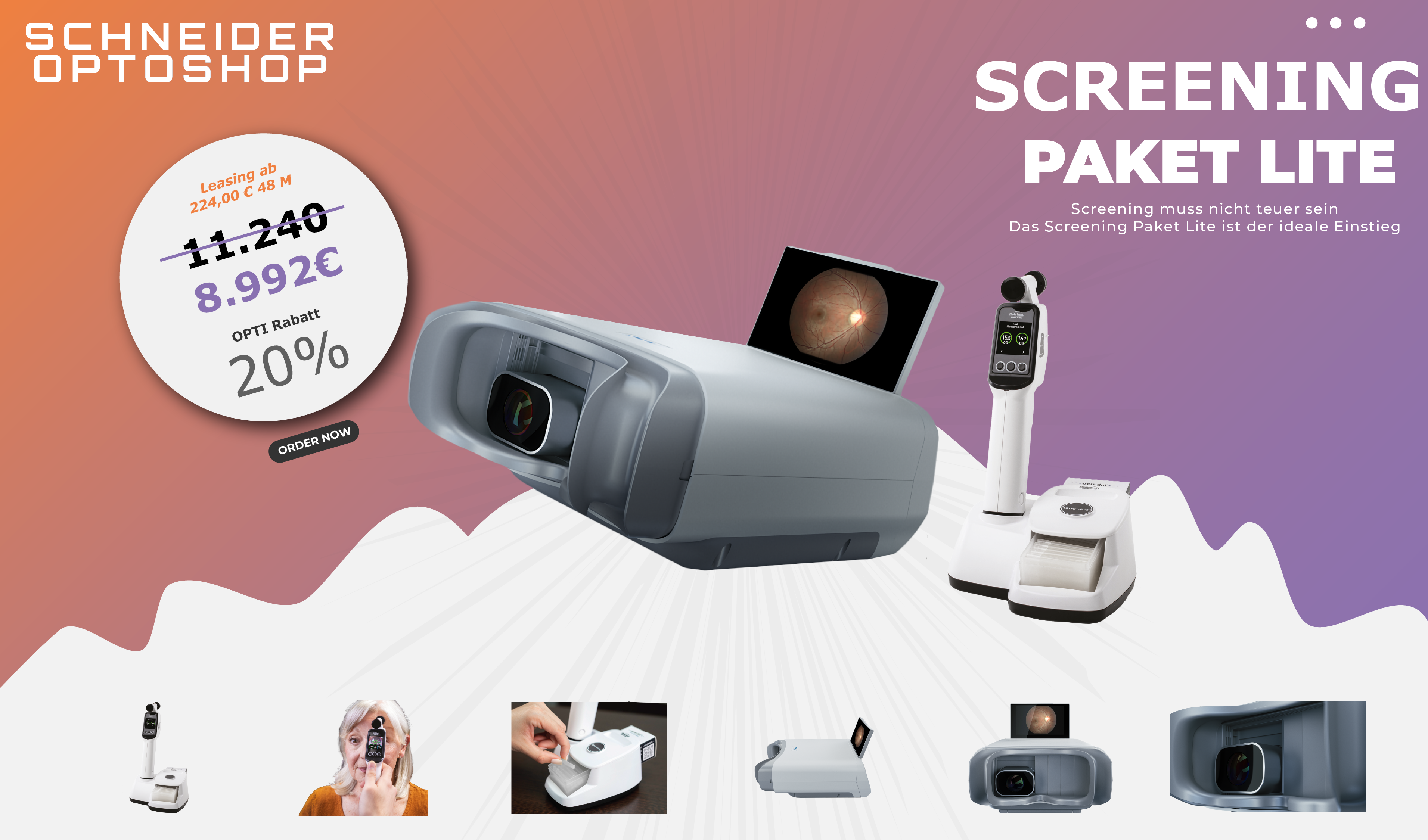
Two core measurements – one goal: see earlier, advise better, act more confidently.
For screening to truly be effective, two things are required: clear images and objective values – quickly, reproducibly and without complicated operation. This package is designed precisely for that purpose:
-
FC162 Automated Fundus Camera: automated, binocular fundus photography (non-mydriatic) – with fast imaging and optional AI-assisted report generation via a third-party screening system.

-
Reichert Tono-Vera®: Rebound tonometry with ActiView™ positioning – measures automatically after correct alignment, objectively and reproducibly, without local anaesthesia.

The result: a screening service that can be integrated into everyday life – and immediately convinces during the consultation.
1) FC162: Fundus photography that practically takes itself
The FC162 is designed to automatically capture retinal images from both eyes (auto-alignment/auto-focus, including guided operating logic).
This creates momentum – and simplifies the process.
Highlights from the product documentation:
-
Non-mydriatic, 50° field of view, 15 megapixels, LED illumination
-
Minimum pupil size: 3 mm, dioptre range: −20 D to +20 D
-
Image formats: JPEG & DICOM, Wi-Fi connectivity, 5" touch display
-
Fast capture approach: the document advertises binocular image acquisition within a short period of time (e.g. "30 seconds obtaining binocular retina images").
-
Optional: AI-supported report (supported by third-party screening) for structured communication of findings
The advantage:
Retinal images are the moment when patients "see it for themselves". This increases understanding, compliance and willingness to attend follow-up appointments – especially among high-risk groups.
2) Tono-Vera: Measuring intraocular pressure – quickly, gently, objectively
The Tono-Vera uses rebound tonometry and does not require local anaesthesia, which increases comfort and acceptance.
The ActiView™ positioning system provides visual guidance for correct alignment; once the position is correct, the device measures automatically.
What makes the difference in everyday life:
- Results in just three measurements within one second (according to documentation) – ideal for screening cycles
- Colour-coded rings indicate the reliability of the measurement – greater certainty in evaluation
- Bluetooth® for updates/connectivity (including prospective EHR connection)
- Well-designed base station for docking/charging (depending on model) and for dispensing/storing Ocu-Dot® disposable probes
Key technical data (excerpt):
- Measuring range: 5–60 mmHg (display range: 1–99 mmHg)
- Accuracy: ±1.0 mmHg (5–20 mmHg) / ±2.0 mmHg (21–60 mmHg)
- Weight (without batteries): 120.3 g, dimensions: 21.25 × 6.6 × 3.0 cm
- Variants: rechargeable or AA battery, calibration-free, ergonomic
The screening flow in practice (how to turn it into revenue rather than expense)
- FC162: Position patient, automatic recording of both eyes, check images directly on screen.
- Optional evaluation/report: structured documentation, AI-supported via third-party screening on request.
- Tono-Vera IOD: short, gentle rebound measurement – automatic after correct alignment.
- Consultation & recommendation: conspicuous values/images can be discussed immediately, follow-up checks can be planned, referral to an ophthalmologist's practice if necessary.
Note: Screening provides indications and progression criteria, but does not replace an ophthalmological diagnosis; if abnormalities are found, the next step is medical clarification.
Who is this package particularly attractive for?
- Optometry/optometry, which aims to professionally expand preventive care services.
- Locations with a focus on glaucoma risk (IOP + optic disc/fundus image as a compelling combination in consultation).
- Customer loyalty models via annual screenings and structured recall intervals.
- Company preventive care/screening campaigns with high throughput.
Would you like to test the screening package live and receive a finished schedule (including price/performance logic for your screening offer)? Then register for a workshop.